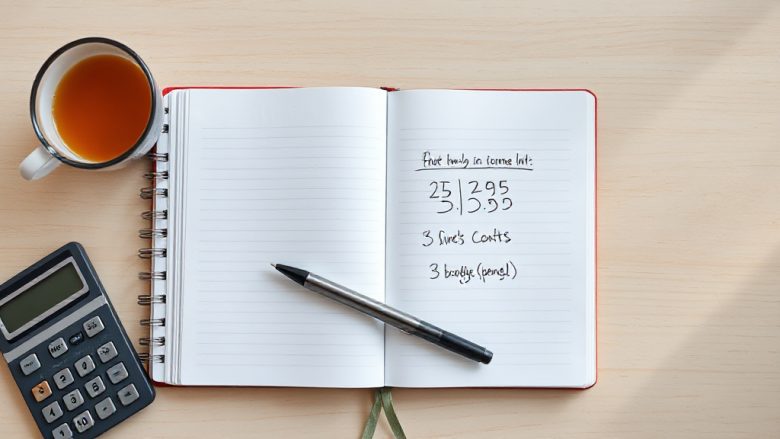
You do not need an app, a course, or a perfect system. You need about an hour and a willingness to look at your money without judgment. That is the whole barrier to entry. Everything else is detail.
Most people avoid budgeting because they think it demands spreadsheets, colour-coded categories, and a personality they do not have. Then they try a complicated method, miss a few days, and decide they are “bad with money.” That is not a character flaw. It is a system that was too heavy to carry.
This is a no-guilt starter plan. How to get started with personal budgeting comes down to three numbers, a single 30-minute setup, and one week of paying attention. No subscriptions. No syncing. No shame.
The only three numbers you need
Forget the twelve-category budget for now. Before you can organise money, you need to know what is actually happening. Three figures give you that picture.
Number one: your monthly income. Take the amount that reliably lands in your account each month. If your pay varies, use the lowest recent month rather than the average. A budget built on your best month breaks in a bad one. Using the floor keeps you safe and gives you a pleasant surprise when a better month arrives.
Number two: your fixed costs. These are the bills that arrive whether you like it or not. Rent or mortgage, utilities, transport to work, insurance, phone, minimum debt payments, childcare. Add them up. This number is your survival line. It is not negotiable in the short term, and knowing it stops you from panicking about money that was never really available.
Number three: your flexible spending. Everything else. Food, fuel beyond the commute, clothes, subscriptions, nights out, the small purchases you barely notice. You do not need to itemise this yet. You just need a rough total for a typical month. Look at your last two bank statements and add up the transactions that were not fixed bills. Most people are surprised, and the surprise is useful. It is information, not a verdict.
Write those three numbers on a single page. Income, fixed, flexible. That page is your entire financial situation in miniature, and it probably took you fifteen minutes. If the flexible number is bigger than you expected, that is not a failure. It is the first honest look you have had in a while, and honest looks are where every workable budget begins.
One more thing worth knowing before you move on: if your fixed costs already eat your entire income, the problem is not your spending discipline. It is your income or your fixed commitments, and those need a different conversation. A budget cannot fix a maths problem, but it will show you the maths, which is half the battle.
A 30-minute setup
Set a timer. This should not take longer, and if it does, you are overbuilding. A notebook works. So does a plain spreadsheet with four columns. Pick whichever you will actually open again, because a beautiful system you ignore is worse than a scrappy one you use.
Start with a simple page layout. Across the top, write your three numbers from earlier: income, fixed costs, flexible spending. Underneath, create four columns: date, what it was, amount, and category. That is it. No formulas, no charts, no conditional formatting. You can add those later if you genuinely want them, but most people never need them.
Now subtract. Income minus fixed costs gives you what is left for everything else. That leftover has to cover your flexible spending, and whatever remains after that is what you can save, repay, or set aside. If the leftover is smaller than your usual flexible spending, you have found the gap you need to close. If it is bigger, you have found money you did not know you had.
Decide on a small number of categories. Three is plenty to begin: bills, everyday, and savings. If you want a fourth, add a category for debt repayment. Resist the urge to create a category for every shop you visit. The purpose of categories is to help you make decisions, not to produce a perfect record. A budget with three categories you understand beats one with thirty you avoid.
Then set one rule for yourself. Not ten. One. Something like: I will check this page every Sunday for five minutes. Or: I will write down any purchase over a certain amount on the day it happens. A single rule you keep builds more momentum than a list of rules you abandon by Wednesday.
Finally, put the page somewhere you will see it. On your desk, pinned in your notes app, taped inside a cupboard door. Out of sight really is out of mind, and this whole exercise depends on the page staying visible.
What to do in week one
Week one is not about cutting back. It is about watching. You are collecting evidence, not issuing punishments. If you start by banning everything you enjoy, you will quit before the habit forms, and you will have learned nothing except that budgets feel bad. They do not have to.
Each evening, spend two minutes writing down what you spent that day. Two minutes. If you miss a day, add it the next morning. Do not try to reconstruct the whole week from memory on Sunday, because you will get it wrong and then feel discouraged by your own inaccuracy. Small, frequent entries stay accurate.
At the end of the week, total the flexible spending. Compare it to the number you wrote during setup. Do not judge the difference. Just note it. Was it higher? Lower? About the same? You now have a real figure instead of a guess, and real figures are the only thing you can plan with.
Look for one pattern. Not five. One. Maybe most of your flexible spending happens on Fridays. Maybe it happens in small amounts you never notice. Maybe a subscription you forgot about is still running. Pick the single pattern that stands out, and decide what you want to do about it next week. One change is enough. Two is ambitious. Five is a fantasy.
Then adjust one number, not the whole budget. If your flexible spending came in higher than planned, either lower the plan for next week or accept the real figure and reduce something else. The budget should describe your life, not an imaginary tidier version of it. A plan that matches reality is one you can keep.
Expect the first week to feel slightly odd. You will notice purchases you used to make on autopilot. That noticing is the entire point. The awareness comes first, and the changes follow almost by themselves once you can see where the money goes. Nobody changes spending they cannot see.
By the end of the week you will have something most people never get: a page that tells the truth about your money. It will not be pretty, and it will not be complete. It will be yours, and it will be enough to build on.
That is how to get started with personal budgeting without an app, a course, or a personality transplant. Three numbers, half an hour, one week of two-minute notes. Keep the page visible, keep the categories few, and let the first month be messy. Messy and honest beats perfect and abandoned every time. Open the notebook tonight, write down the three numbers, and let tomorrow’s spending land on the page without commentary. The rest gets easier from there.