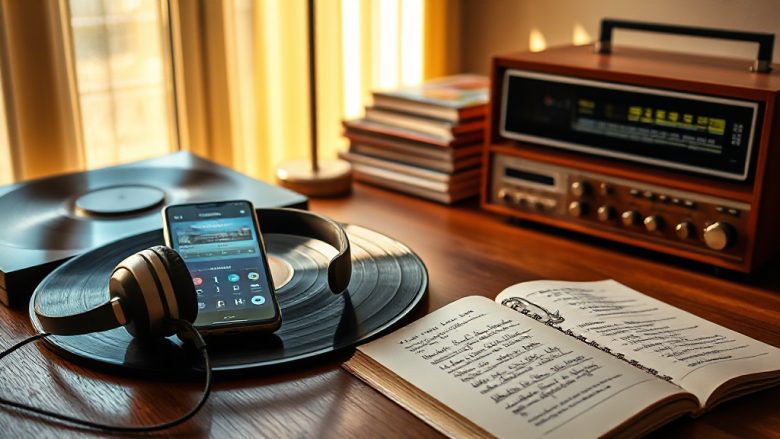
You open your streaming app. The home screen loads a familiar grid of covers, a few “made for you” mixes, and a row called something like “New Releases for You.” You scroll. You skip. You scroll again. Twenty minutes later you close the app without playing a single song all the way through. If that sounds familiar, the problem isn’t your taste. It’s that algorithmic discovery has quietly narrowed into a loop, and the best ways to discover new music often sit just outside that loop.
Streaming platforms are extraordinary tools. They hold millions of tracks and can serve one to you in under a second. But the systems that decide what you hear are built to keep you listening, not to surprise you. They learn what you already like and then repeat it with slight variations. That’s useful when you want background music. It’s terrible when you want to feel something new.
This guide walks through why recommendations go stale, then lays out seven practical methods for finding music you’ll actually keep. Some are digital, some are stubbornly analog, and none of them require a subscription tier upgrade.
Why Algorithmic Recommendations Start to Feel Stale
Recommendation engines work on similarity. If you played three indie folk albums, the system concludes you want more indie folk. That logic is sound up to a point, but it creates a feedback loop. The more you listen to what it suggests, the more confident it becomes that you only want that. Your profile narrows instead of expands.
There’s also a commercial incentive at play. Platforms pay for the right to host music, and some tracks cost more to license than others. A recommendation system that optimizes for engagement and cost will favor certain catalogues over others. You don’t see the math, but you feel the result: the same dozen artists appearing in every playlist, the same producers behind half the tracks, the same tempo and mood across an entire “discover” feed.
Then there’s the familiarity bias built into human behavior. When you’re tired or busy, you tap the playlist you know. The algorithm reads that tap as a preference. It isn’t wrong, exactly. It just can’t tell the difference between a genuine favorite and a lazy click. Over months, that confusion compounds until your entire library sounds like one long song.
The fix isn’t to abandon streaming. It’s to add inputs the algorithm can’t replicate: human judgment, community knowledge, and deliberate friction.
Follow Human Curators Instead of Playlists
A playlist is only as good as the person who made it. That sounds obvious, but most listeners treat playlists as interchangeable. They aren’t. A playlist assembled by a person with a point of view will take you places an algorithm won’t, because it can include a track that doesn’t “fit” statistically but fits emotionally.
Start by finding curators rather than collections. Look for people who write a few lines about why a song matters. A short note like “this is the sound of a band running out of money in a good way” tells you more about the curator’s taste than fifty tracks of genre tagging. When you find someone whose notes make you curious, follow them and check back weekly. One good curator is worth more than ten generic mood playlists.
Independent radio and public broadcasters are another underused route. Stations that employ actual music programmers still exist, and their late-night shows are often where genuinely strange, wonderful records get their first airing. You don’t need to listen live. Most publish archives and tracklists, so you can skim a two-hour show in five minutes and pull out the three songs that grab you.
Music journalism still matters too, though it has moved. Long-form reviews, artist interviews, and year-end lists written by people who argue with each other are useful precisely because they disagree. A consensus list tells you what’s popular. A contested list tells you what’s interesting.
One more human source: friends with taste you don’t share. Ask them what they’ve been playing. Not because you’ll like all of it, but because their blind spots are different from yours. The overlap between your tastes is where the good surprises live.
Use Niche Communities to Find Music You’d Never Search For
Search requires you to know what you’re looking for. Communities don’t. That’s their advantage. A forum dedicated to a specific subgenre, a Discord server for a particular scene, or a subreddit for obscure reissues will surface music you’d never have typed into a search bar because you didn’t know it existed.
The key is to go narrow. Broad music communities tend to recycle the same recommendations. Small ones don’t have enough members to sustain a consensus, so they stay weird. A thread about 1970s Brazilian psychedelia, a group for fans of a single defunct label, a message board for people who collect field recordings: these are the places where discovery still feels like discovery.
Participate rather than lurk. Ask a specific question. “I like early ambient but find most modern stuff too polished, where should I go?” will get you better answers than “recommend me something good.” Specificity signals that you’ll actually listen, and people respond to that.
Bandcamp and similar artist-first platforms function as communities too, especially if you use their tagging and follower features deliberately. Follow the listeners, not just the artists. Someone who owns forty records in a niche you’re curious about has effectively built you a curated library. Their collection page is a map.
Local scenes count as communities as well. A venue’s listings page, a record shop’s staff picks, a promoter’s social feed: these are human filters operating in real time. They know what’s happening in your city this month, which no global algorithm does.
Try Offline Methods That Still Work
Digital tools are convenient, but some of the most reliable discovery happens away from a screen. Physical record shops remain one of the best filters ever invented. A good shop is arranged by someone with opinions. The staff picks shelf alone can outperform a month of streaming recommendations because a human chose those records for reasons a machine can’t articulate.
If you don’t have a shop nearby, libraries and secondhand sales are worth the effort. A charity shop’s CD rack is a time capsule of whatever people donated, which means it’s full of music that fell out of fashion and might be due for a reappraisal. You’ll pay almost nothing and you’ll listen differently because you committed to the object.
Live music is the most underrated discovery tool. Opening acts exist to be discovered. Go early, stand near the front, and pay attention to the support band. They’re often local, often hungry, and often better than the headliner on a good night. Even a genre you don’t usually like becomes interesting when you’re ten feet from it.
Radio still works if you use it right. Not streaming radio, which is algorithmic, but a station with a schedule and a host. Tune in to a show you wouldn’t normally choose. The friction of not being able to skip is the point. You sit with a song long enough to decide whether you actually dislike it or just didn’t expect it.
Finally, let other media lead you. Film soundtracks, end credits, video game scores, and documentary needle drops are curated by people whose job is to make you feel something in context. Shazam the track, then follow the artist. Some of the best discoveries arrive sideways.
Build a Discovery Habit That Actually Sticks
Discovery isn’t a one-off activity. It’s a habit, and like any habit it needs a trigger and a low barrier to entry. The mistake most people make is treating it as a project. They set aside a Sunday to “find new music,” get overwhelmed, and never do it again.
Instead, attach discovery to something you already do. On your commute, play one track from an unfamiliar artist before your usual playlist. While cooking, put on a curated radio show instead of your saved albums. Small, repeatable actions beat occasional deep dives.
Keep a capture system. When you hear something interesting in a shop, a café, or a TV show, save it immediately. A notes app, a voice memo, a running list: the format doesn’t matter. What matters is that the moment passes and the name doesn’t. Most discoveries are lost to forgetting, not to scarcity.
Give new music a fair trial. One listen isn’t enough for a lot of good records. The songs that stick are often the ones that confused you first. Set a rule: if something intrigues you even slightly, play it three times across different days before deciding. You’ll be surprised how often the third listen flips your opinion.
Prune as you go. A library full of maybes becomes noise. If a track hasn’t earned a place after a few months, let it go. A smaller, sharper collection makes it easier to notice when something genuinely new arrives.
And rotate your sources. If you’ve been leaning on one curator or one community for a year, add another. Tastes drift, and the inputs should drift with them. The goal isn’t to find the perfect system. It’s to keep the pipeline open.
Here’s a challenge for the week ahead. Pick one method from this article that you’ve never tried. If you always stream, visit a record shop or tune into a scheduled radio show. If you always browse alone, join a niche forum and ask one specific question. Then listen to three things you’d never have chosen on your own, all the way through, without skipping. That’s it. One week, one new habit, three unfamiliar songs.
The best ways to discover new music aren’t secret. They’re just less convenient than pressing play on a playlist you’ve heard forty times. Convenience got you into the loop. A little deliberate inconvenience is how you get out.